
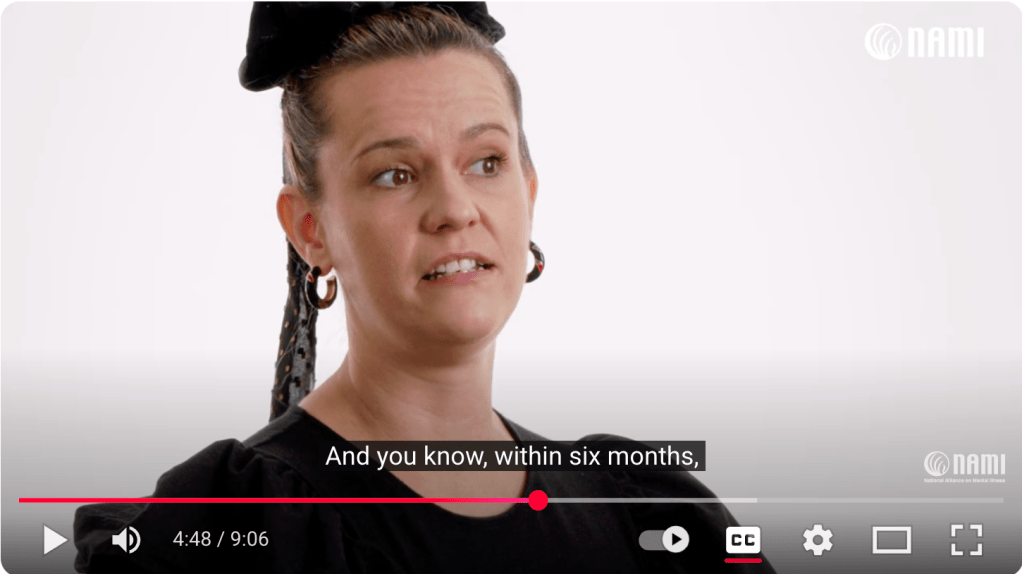
Finding hope and acceptance through the NAMI support group
Claudette Pombo found out she had bipolar I disorder after experiencing her first manic episode. She shared her journey from diagnosis to recovery in a video for NAMI, the National Alliance on Mental Illness.
In the YouTube video, “Living with Bipolar I: My First Manic Episode” Pombo talks about her deeply personal and often misunderstood experiences that come with serious mental illness. Her candid account provides insight into both the confusion and resilience that can define the path toward recovery.
Living With Undiagnosed Mental Illness
Claudette begins by expressing her wish that mental illness had been discussed openly during her childhood and in school. She says an absence of education about mental health left her unprepared for what happened to her.
Her First Manic Episode
Pombo story centers on the surreal and distressing experience of her first manic episode.
She went to an airport to fly to San Francisco for her circus-themed wedding there. She was elated and energetic At the airport, a female security officer stopped her and said she had been reported as a mission person, and no one had been able to reach her for five days.
“I realized her reality was not the same as my reality,” Pombo says. It was all a delusion, she began to realize. After that she said she was involuntarily hospitalized for 10 days.
Hospitalization and Recovery
During her stay in the hospital, Pombo experienced intense and vivid delusions and hallucination, ranging from being nominated for the Nobel Peace Prize to meeting Oprah Winfrey and Barack Obama, and thinking she was a Avril Lavigne. She thought she had figured out how to be a shapeshifter, and could people how to do it by looking in the mirror.
She says that her hallucinations, despite being fantastic and seemingly impossible, were entirely real to her in those moments. She looks back at the traumatic experiences with humor, but warns of the serious distress manic episodes can cause.
After leaving the hospital and receiving medication, Pombo hoped to move on as if nothing had happened. But she found that unresolved symptoms made everyday life unmanageable. This led her to seek therapy, which she attended for a year, and to come to terms with her diagnoses: Bipolar I, PTSD, OCD, and General Anxiety Disorder.
Finding Support Through NAMI
A turning point in Pombo’s journey was connecting with NAMI, facilitated by her therapist. Meeting an advocate who lived successfully with mental illness helped her over the stigma and accept her diagnoses. She learned that one could lead a fulfilled and successful life while managing mental health challenges.
Medication and ongoing support have become vital to her recovery process. Despite the stigma surrounding psychiatric medications, finding the right treatment dramatically improved her daily life. Today, years later, she enjoys a rewarding career, a supportive partner, and looks forward to marriage—this time, without circus illusions.
Pombo recommends NAMI to those looking for support. NAMI provides resources, helplines, local groups, and crisis intervention. The National Alliance on Mental Illness, NAMI, is dedicated to improving the lives of people affected by mental illness. Founded in 1979, they offers free education, advocacy, and peer-led support programs across the country.
Its mission is to build better lives for individuals and families through community awareness, stigma reduction, and access to care. NAMI provides in-person and virtual support groups, including NAMI Connection for adults with mental health conditions and Family Support Groups for caregivers.
Many online groups are available through HeyPeers, a platform that hosts NAMI’s peer-led meetings virtually, making them accessible nationwide for those seeking confidential, structured, and empathetic support.
Latest posts
- Please Don’t Reply: Why I Sent Hundreds of Texts During My Manic Episode and Couldn’t Respond
- Why Manic Spirituality Feels More Real Than Reality
- Salt Cravings, Dirty Fingernails, and Cracked Skin: The Physical Signs of My Mania
- AI and Bipolar Disorder Mood Detection: How Machines Are Learning to Spot Mania Before You Can
- I Hid Things Everywhere, Even From Myself: The Compulsion Nobody Warned Me About

 Mania Insights
Leave a comment