
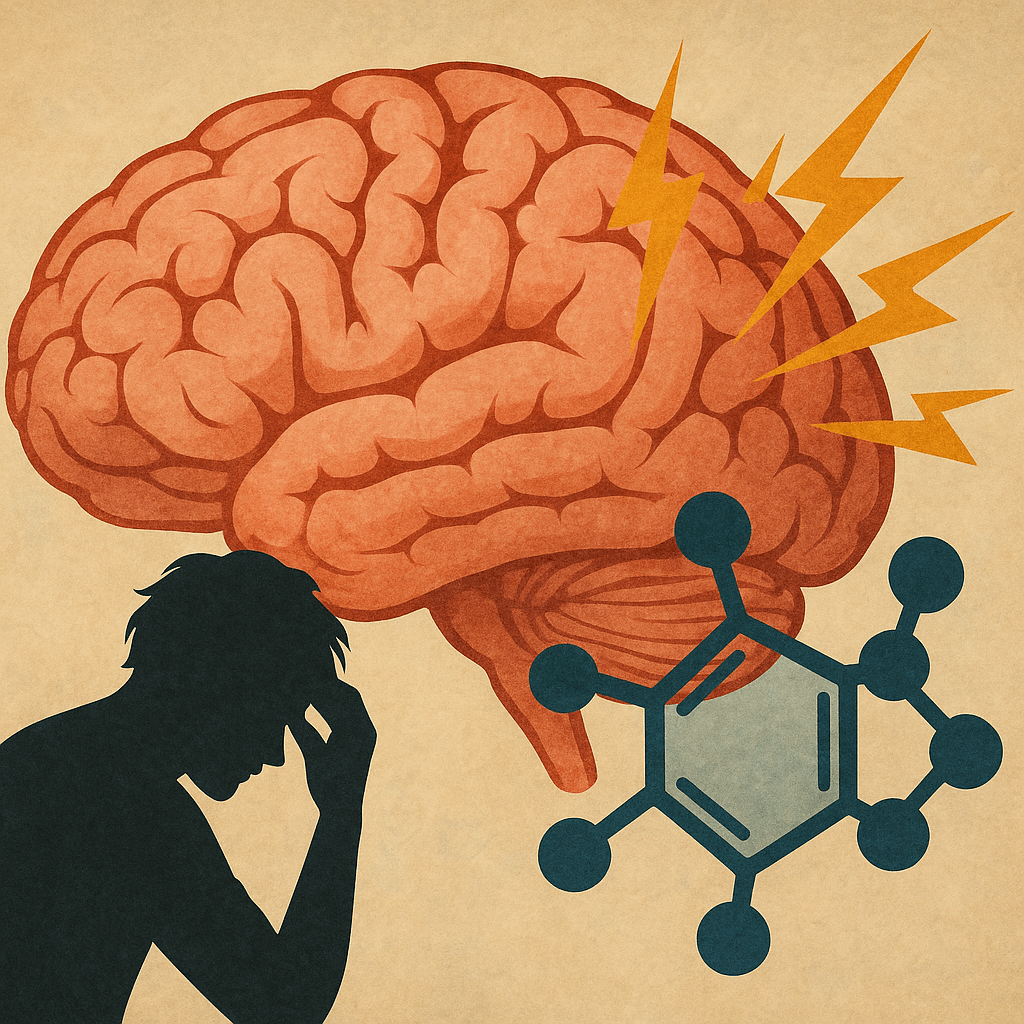
Adenosine shortage ties mania and seizures together
–A new study says bipolar mania and epilepsy may share an underlying brain chemistry flaw, pointing to potential treatments that could help both conditions.
Researchers at Rutgers University, led by Scott Daniels and Detlev Boison, say low levels of adenosine might drive both disorders. The work, published Oct. 9, 2023, in Neuropharmacology, is based on years of research using animal models, brain signaling studies, and patient data.
Bipolar mania affects about 1% of adults with intense mood swings and sleeplessness. Epilepsy affects 1 in 26 people, causes recurrent seizures. Theyshare traits like sleep disruption and treatment resistance in about one-third of patients.
The researchers say the issue could be purines, molecules that includes ATP, which fuels cells, and adenosine, which calms brain activity. In epilepsy, a lack of adenosine fails to stop seizures. In mania, an adenosine shortage disturbs sleep and drives hyperactivity.
Some well-known drugs already raise adenosine levels. Lithium, valproate, and carbamazepine—drugs used for both epilepsy and bipolar disorder—boost the chemical’s activity.
Other therapies such as electroconvulsive treatment and ketogenic diets also increase adenosine.
The study also linked stress to worsening symptoms. Cortisol, the body’s main stress hormone, blocks an enzyme needed to produce adenosine, leading to higher uric acid levels and potentially greater treatment resistance. Drugs that reduce cortisol, such as clonidine, may help restore balance.
How to Boost Adenosine in the Brain
Adenosine itself can’t be taken as a pill—the body breaks it down too quickly—but several lifestyle factors and treatments can raise its levels naturally.
- Sleep: Deep sleep improves the natural adenosine daily cycle, while chronic sleep loss lowers baseline adenosine.
- Exercise: Moderate to intense activity increases adenosine outside brain cells, helping regulate energy and calm overactive circuits.
- Diet: Avoiding caffeine allows adenosine to work normally, since caffeine blocks its receptors. Ketogenic diets, often studied in epilepsy, also appear to boost adenosine signaling.
- Medications: Mood stabilizers and seizure drugs such as valproate and carbamazepine enhance adenosine’s effects. The gout drug allopurinol may help by reducing uric acid, an opposing byproduct.
Source: https://pmc.ncbi.nlm.nih.gov/articles/PMC10841508/
Note from a reader: I have often wondered about the connection between epilepsy and bipolar mania. When I have looked up several medications, I see they are often meant for seizures and used off-label for mania and depression in bipolar I.
Medicines used for Epilepsy and bipolar
• Carbamazepine (Tegretol): Used for focal (partial) seizures; stabilizes sodium channels.
• Valproate/Valproic Acid (Depakote): Effective for generalized and focal seizures; increases GABA levels.
• Lamotrigine (Lamictal): Broad-spectrum, used for focal and generalized seizures; affects sodium channels and glutamate release.
• Gabapentin (Neurontin): For focal seizures; modulates GABA activity.
This shows me there is a connection in brain activity for both disorders. One connection is adenosine, based on the research above.
A note about allopurinol: I was prescribed allopurinol (100mg) a few years ago by my doctor for high blood pressure. Though it is typically prescribed for gout. There were reports that high uric acid levels may contribute to high blood pressure. You would think my allopurinol dose might help with hypomania and mania, however I did not notice that effect. I did, however, discontinue using allopurinol for high blood pressure (because it was not effective) around the time my hypomania turned into mania. I’m not sure if any of this is related, but thought it worth sharing.

 Mania Insights
Leave a reply to Huberman Lab Hosts Dr. Chris Palmer For Discussion of Managing Mania And Depression With The Ketogenic Diet – Mania Insights Cancel reply