
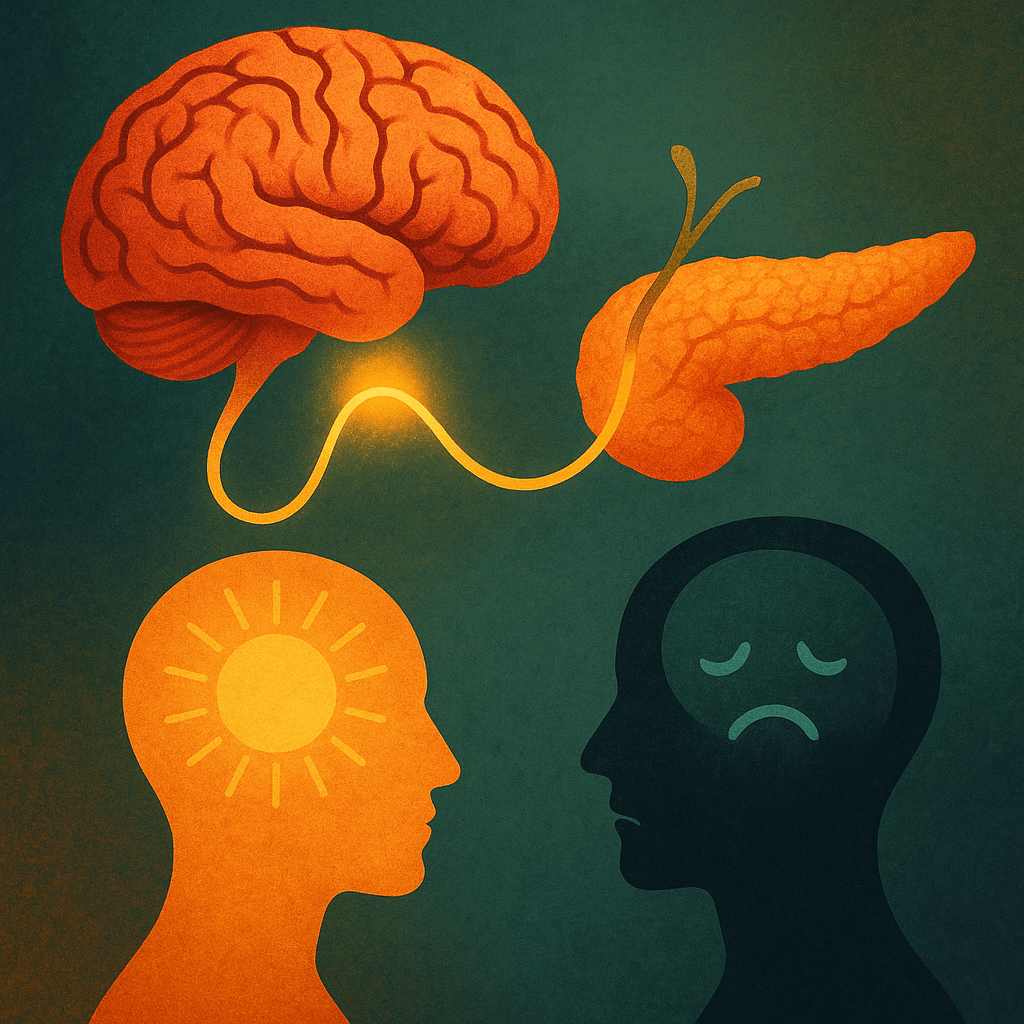
How insulin fuels mood swings
— A new study reveals a connection between the pancreas and brain that cause mood swings in bipolar disorder.
This link, driven by insulin signals, ties the body’s blood sugar control to daily emotional highs and lows.
Bipolar disorder affects millions of people, causing periods of depression and mania that disrupt daily life.
Many also have metabolic issues, like unstable blood sugar. Scientists have long wondered why these problems often go hand in hand.
Now, a research team has uncovered a key piece of the puzzle.
Using skin cells from bipolar patients, researchers created miniature pancreas and brain cells in the lab. They found the pancreas cells struggled to produce insulin, the hormone that regulates blood sugar.
The cause? An gene called RORβ, previously linked to bipolar risk. Then, the researchers genetically altered mice to boost this gene in their pancreases. The results were eye-opening.
During the day, when mice typically rest, those with the altered gene acted depressed. They moved less and showed withdrawn behavior in tests mimicking human mood disorders.
At night, their active period, they became hyperactive, displaying mania-like traits such as excessive energy and restlessness.
The mechanism hinges on a feedback loop. In daylight, the overactive RORβ gene reduces insulin output from the pancreas. Low insulin levels overstimulates the hippocampus. It’s a region of the brain that’s important for emotions and memory.
At night, insulin levels increase, overly calming the hippocampus and sparking manic episodes. This cycle matches the body’s circadian rhythm—its 24-hour clock.
The new discovery could reshape how medical professionals approach bipolar disorder.
It shows a connection between metabolism and mental health, suggesting that stabilizing insulin might help manage mood swings.
While the study used mice, its results align with human data.
For now, the findings emphasize the importance of consistent sleep and eating schedules for those with bipolar disorder.
Source: Nature Neuroscience, August 2025, Neuroscience News
Comment from a reader: Hopefully this finding will lead to more promising treatments for bipolar and mood disorders. It seems like there are similarities with other findings such as “Fatty liver disease common in bipolar disorder—even in people who aren’t overweight”, and “Researchers testing ‘ketogenic-mimicking’ plan for treatment of mania and depression“, which also have metabolic roots. From personal experience with bipolar, I have also had metabolic issues my entire life, with my weight constantly in fluctuation.
See related news article: New Book Offers a Metabolic Key to Mania and Mental Illness

 Mania Insights
Leave a comment