
The Data Doesn’t Lie: What Your Phone Records Reveal When Your Brain Doesn’t
By Alex Ronan
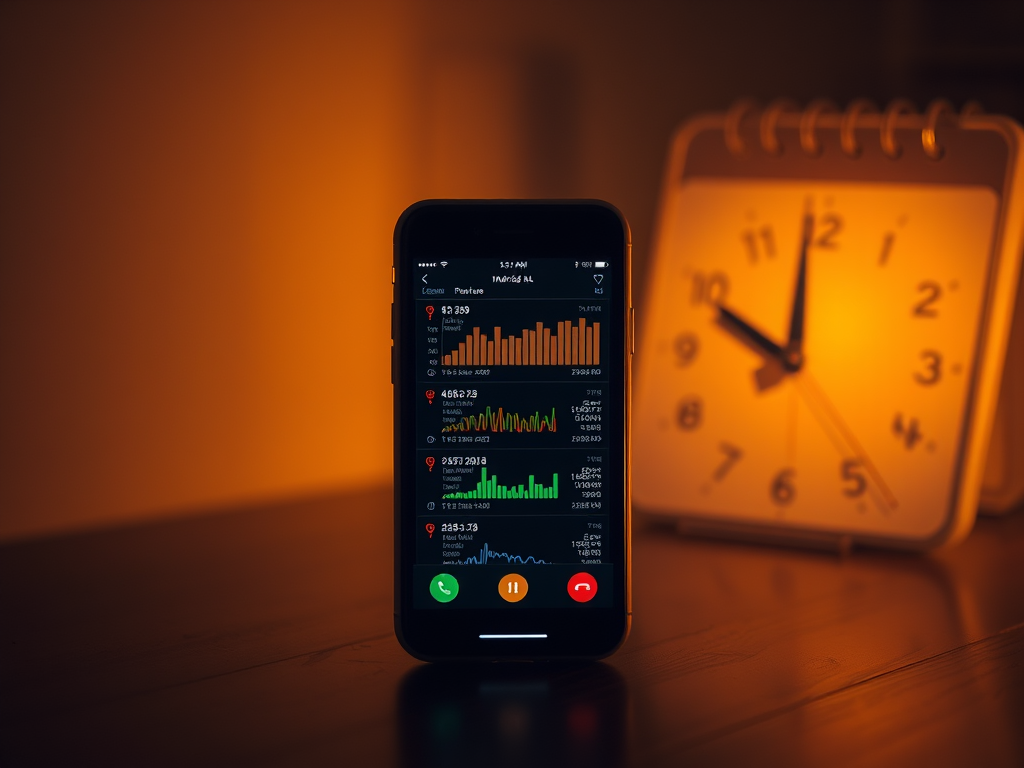
I didn’t realize my manic episode was escalating until I looked back at the data months afterward. The phone records. The objective record of calls and texts made, duration, timing, frequency. When you’re in it, you can convince yourself that everything is normal, that you’re just more social, more engaged, more connected. The data tells a different story.
October 22, 2024. That’s when I called my psychologist for another appointment, because I noticed mild symptoms of hypomania. I was aware something was shifting. Foolishly I thought I could manage it.
By December my therapist and my wife were talking about my symptoms. and my spiraling behavior was obvious to everyone but me. I was in denial. I was telling people it was just ADHD and just stress from the divorce. I was still convinced I had mild hypomania, not full blown bipolar.
Now, when I look back at my phone records I see 15 calls in a single day. Hour-long conversations. Back to back. The same pattern continued on even more intensified with text messages.
In December I had a night out with freinds. The memories are scattered and strange. I remember talking incessantly to everyone, and running around like a crazy person. The manic energy was external now, visible, impossible to pretend it was normal.
Another night a friend messaged me: “I really hope you’re sleeping.” At that point my friends were scared for me. That one message contains the perspective of someone looking at me from the outside. The concern. The recognition that sleep had become unusual. The implicit fear that something was spiraling.
Cell phone activity can be an early warning
This is why I think phone records matter as an early warning system. They don’t depend on interpretation or perspective. They just show what actually happened.
The pattern shows progression. It shows a baseline in October when I’m concerned enough to call my psychologist. Then then the escalation through November into January. Not linear escalation, but acceleration. The number of calls and texts increases.
But here’s the thing that’s hard to see from the inside: it doesn’t feel like too much when you’re doing it. Each call and text seems completely normal reasonable. Each conversation seems important. The urgency feels justified. You’re not aware that you’ve its unusual that you’ve made dozens of calls and texts.
I’ve talked to other people living with bipolar disorder, and this pattern shows up again and again. Someone notices the behavior before the person doing it does. Friends, family, partners. They see the escalation in communication patterns. The late-night texts. The sudden chattiness. The topics jumping and looping back. The energy that’s higher than baseline.
The tragedy of living with bipolar disorder is that insight and self-relection disappears when you need it most. The moments when you should be most alert to the symptoms are the moments when the illness is best at convincing you that everything is fine. That you’re not manic, just energized. Not out of control, just productive. Not in crisis, just fully alive and empowered for once.
But that’s when your digital records reveal than your own assessment. Unfortunately, wasn’t able to stop the episode, until it was too late. I ended up in police custody, and my wife and therapist requested a 5150 hold.
Your phone can be a monitor if you let it. The data is always there. The question is whether you’re paying attention to what it’s showing you.
Read recent posts at Mania Insights
- What My Phone Records Exposed About My Manic Episode: An Early Warning System
- Can GLP-1 Drugs Like Ozempic Help Manage Bipolar Disorder?
- Mania and the Law: When a Bipolar Disorder Criminal Defense Meets the Courtroom
- Athletes and Bipolar Disorder: When the Drive That Fuels Greatness Becomes Mania
- Manic Thoughts: Everything Around Me Was Moving in Slow Motion
 Mania Insights
Leave a comment