
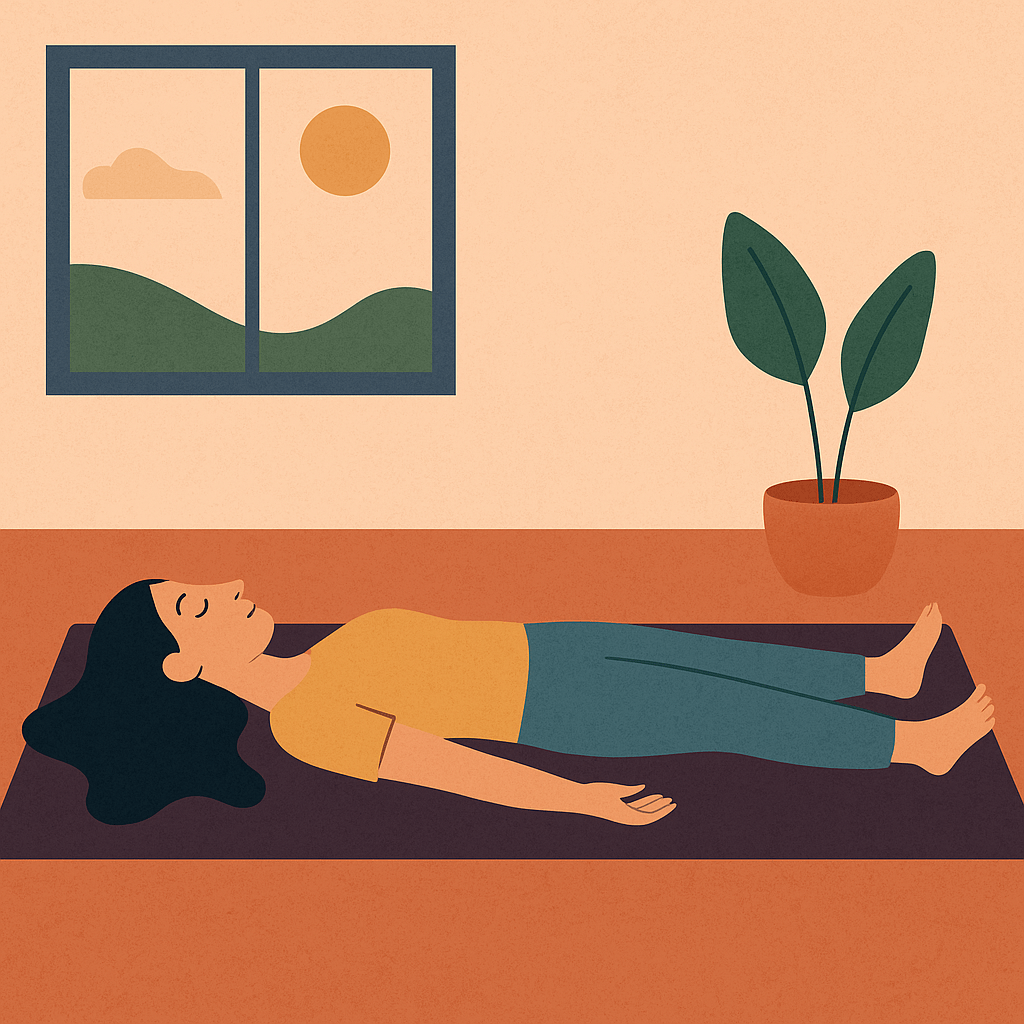
A simple practice for deep relaxation
– By Liam Ronan
– I first learned about Yoga Nidra, a type of guided meditation, while listening to a podcast by neurologist Dr. Andrew Huberman.
His guest Ryan Soave, an addiction recovery expert, said it’s a powerful tool for relaxation and overcoming addiction. He said he had his patients in recovery practice it one hour every day, first thing in the morning.
If you are suffering from bipolar mania or depression, it can support your mental, emotional, and physical well-being. I’ve been practicing it almost every day and it has improved my peace of mind and mental balance.
It was featured in an April 2025 podcast “”Tools for Overcoming Substance & Behavioral Addictions.”
Unlike traditional meditation, which requires focus and concentration, Yoga Nidra allows you to lie comfortably and simply follow verbal instructions. It makes it easy for nearly anyone to try, regardless of physical ability or meditation experience.
I use it for two main purposes:
Relaxation of body and mind at any time of day
I prefer it in the morning. It induces state of deep relaxation, sometimes called Non-Sleep Deep Rest (NSDR).
It uses simple breathing techniques and a body scan. The body scan is a guided visualization. It has you focus on every individual body part from your eyes, ears, heart, and down to your toes.
I really enjoy the mediations by Ally Boothroyd for NSDR.
• Yoga Nidra Body Scan Meditation by Ally Boothroyd
• Yoga Nidra for Physical Health and Deep Healing by Ally Boothroyd
• Yoga Nidra with Nature Sounds by Ally Boothroyd
In the middle of the night
If I wake up and have trouble falling back to sleep. Insomnia and disrupted sleep patterns are common in bipolar disorder and can worsen both manic and depressive episodes. I really enjoy the voice and style of Kristin Rose for sleep.
• Yoga Nidra for Insomnia and Deep Rest by Kristin Rose
• 8 Hours Sleep Meditation for Deep Sleep by Kristin Rose
• Yoga Nidra Meditation for Peaceful Sleep by Kristin Rose
There are several free videos on YouTube with Yoga Nidra. So search around for ones you enjoy.
With bipolar disorder we often experience heightened stress responses, which can trigger or intensify mood swings and anxiety.
Yoga Nidra promotes deep relaxation by shifting the body into a parasympathetic state, lowering cortisol levels, and slowing the heart rate.
It’s also been shown to increase melatonin production and support natural sleep cycles. Even a short session can simulate several hours of deep rest, offering recovery without the side effects of medication.
While bipolar disorder has impaired my concentration and memory, especially during depressive the phase, Yoga Nidra helps quiet my inner dialogue (which is often negative) and enhances mental clarity and creativity.
Finally, it helps foster a sense of empowerment and recovery. Because bipolar disorder can leave you feeling out of control, it offers a tool that can be practiced independently, without equipment or cost, and gives you a sense of self love.

 Mania Insights
Leave a comment