
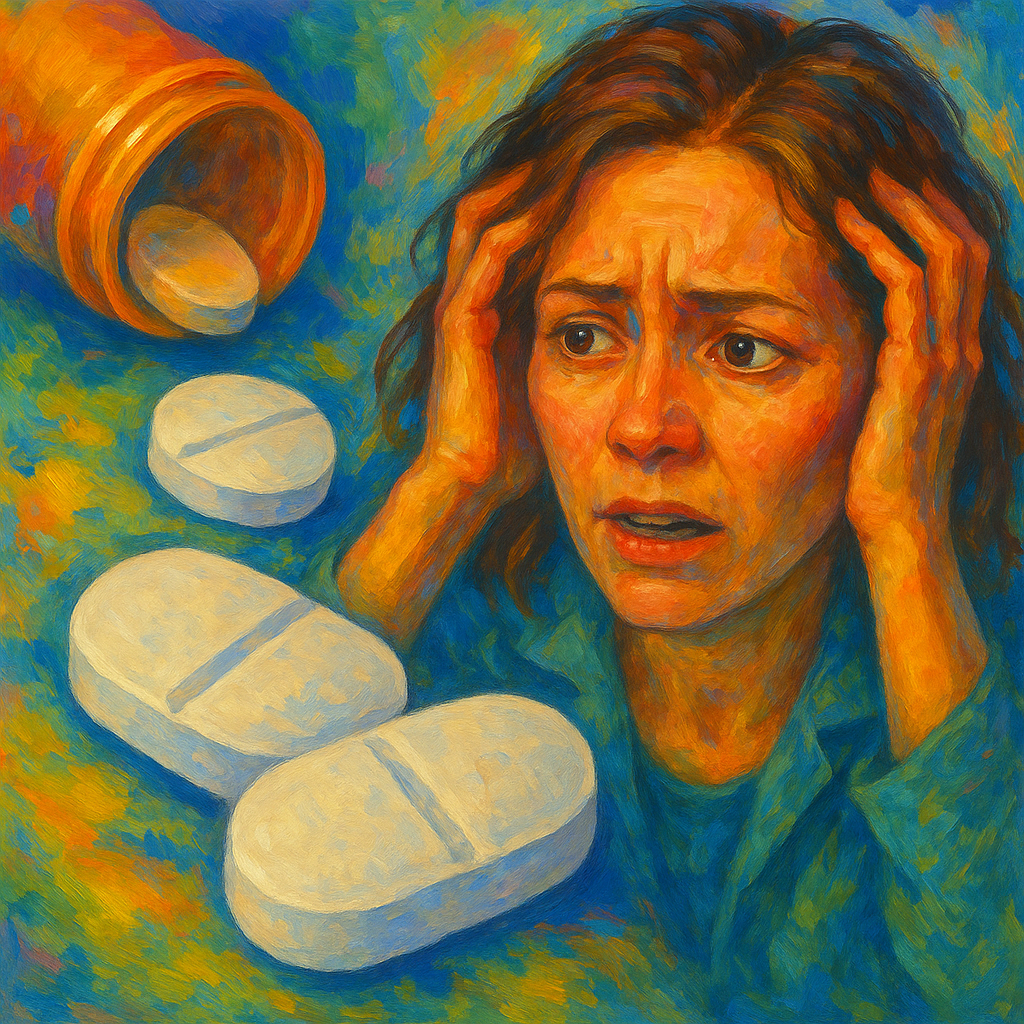
Symptoms often persist after stopping steroid therapy
—Widely prescribed corticosteroids can cause severe psychiatric symptoms including mania and psychosis in patients. Two-thirds experienced both conditions simultaneously, according to a comprehensive review published in Frontiers in Pharmacology.
The review, released July 21, 2025, analyzed 40 studies involving thousands of patients. It found that corticosteroid-induced psychiatric symptoms are more common and persistent..
The report’s conclusion: “In 64.7% of clinical cases and 33.3% of research studies reviewed, patients taking corticosteroids presented with both manic and psychotic symptoms; in 11.8% of clinical cases and 1 (out of 6) quantitative research patients under corticosteroids presented with manic symptoms only, whereas in 23.5% of clinical cases and 3 quantitative studies, psychotic symptoms only.
Prolonged and high-dose corticosteroid therapy, pre-existing psychiatric conditions, older age and female sex represent risk factors, which are likely to increase individual susceptibility to corticosteroid-induced symptoms of mania and/or psychosis.”
Women, elderly patients, and those with pre-existing mental health conditions face higher risks. Prolonged treatment and high doses also increase the likelihood of developing psychiatric symptoms, though even low doses can trigger problems.
Corticosteroids like prednisone and methylprednisolone are widely prescribed medications due to their anti-inflammatory properties. They’re often used to treat conditions such as rheumatoid arthritis, multiple sclerosis, lupus, and respiratory disorders.
The psychiatric symptoms can include elevated mood, decreased need for sleep, grandiose delusions, hallucinations, and aggressive behavior. In many cases, the symptoms persisted even after patients stopped taking the steroids, requiring treatment with antipsychotic medications and mood stabilizers.
The study highlighted several troubling cases, including an 89-year-old patient who developed severe hallucinations shortly after starting steroid therapy, and a 35-year-old surgical patient who experienced acute psychotic symptoms within four days of receiving high-dose treatment.
Researchers emphasized that gradual tapering of steroid doses, rather than abrupt discontinuation, may help reduce psychiatric risks. However, they noted that even careful dose reduction doesn’t always prevent these side effects.
The review calls for updated treatment guidelines and better diagnostic criteria for steroid-induced psychiatric symptoms. Future research should focus on identifying which patients are most vulnerable and developing strategies to prevent these serious complications.
Comment: It is interesting to read there are many possible triggers or co-factors for mania. I’ve read that changes in prescriptions, especially stopping regular medications can affect mania. In my case, it did coincide with stopping hormone replacement therapy, specifically testosterone supplementation.
I think more common triggers for manic episodes are major stressful events, such as divorce, losing a job, and coping with the death of a loved one. Co-factors can also include substance abuse, increased consumption of alcohol, caffeine, nicotine, and other stimulants.
Recent Headlines
- Please Don’t Reply: Why I Sent Hundreds of Texts During My Manic Episode and Couldn’t Respond
- Why Manic Spirituality Feels More Real Than Reality
- Salt Cravings, Dirty Fingernails, and Cracked Skin: The Physical Signs of My Mania
- AI and Bipolar Disorder Mood Detection: How Machines Are Learning to Spot Mania Before You Can
- I Hid Things Everywhere, Even From Myself: The Compulsion Nobody Warned Me About
 Mania Insights
Leave a comment